Thyssenkrupp
Steer-by-wire calibration tooling and steering-column durability automation
Overview
Thyssenkrupp
Steer-by-wire calibration tooling and steering-column durability automation
Two summers at Thyssenkrupp building internal tooling for steer-by-wire calibration and steering-column durability validation.
OEM steering-feel targets — luxury, sporty, light at low speed, stable at highway — got turned into tunable control behavior, validated in HIL, and backed by durability runs with enough telemetry to trust the results.
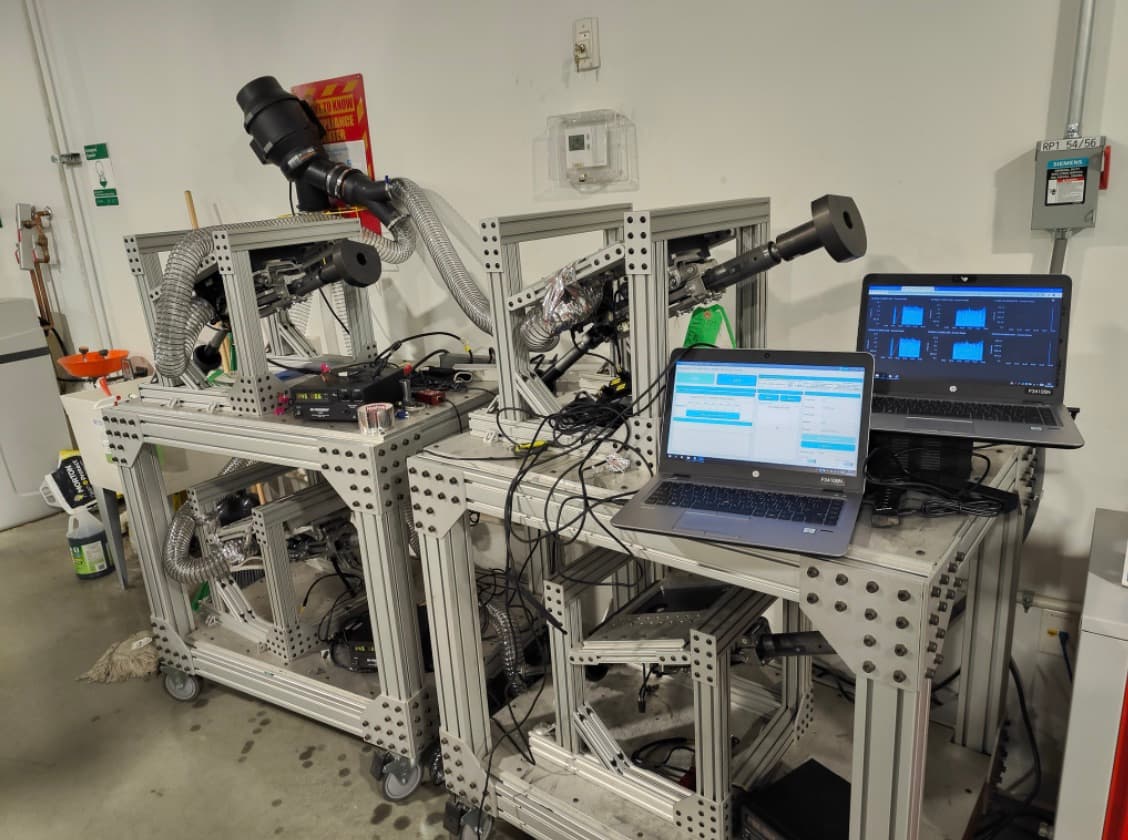
Multi-station durability automation
A durability test platform: PC → PSU → MCU(CAN) → steering column. The PC flashed column-specific firmware, distributed config (voltage, current limits, logging interval, test name), and issued motion profiles for repeated tilt, telescope, and return cycles — repeatable across multiple stations with enough telemetry to debug failures.
Cooling characterization and thermal limits
Test-analysis side. Temperature and current data was tracked and tied back to failure analysis. We tested a bunch of cooling configurations.
Crash-representative drop-tower attachment
Steering-column attachment for the drop tower so the setup mimicked crash end conditions more closely. Automotive OEMs (especially ones TK works with) can be over-the-top when it comes to durability testing specs - maybe thats why my car has 100,000 miles on it and runs like its new :)
ControlDesk 3D steering-feel fine tuner
Second summer: steer-by-wire calibration. A ControlDesk 3D fine tuner translated OEM steering-feel requests into a tunable assist map indexed by handwheel angle and vehicle speed. Validated in HIL/MotionDesk, refined live against parking, lane-change, oversteer, understeer, and other real driving scenarios.
3D terrain generator for MotionDesk
3D terrain generator that turned road and environment data into MotionDesk simulator terrain, so steering behavior could be exercised against realistic road inputs instead of synthetic ones.